

Here’s a stat that should be common knowledge but somehow isn’t: only about 18% of women can orgasm from penetration alone. That’s not a ‘some women’ problem. That’s a ‘most women’ problem. And if you’ve ever wondered why sex sometimes feels like it’s almost there but not quite, this is probably why.
A vibrator during sex isn’t a replacement for your partner. It’s not a commentary on their skills. It’s an upgrade to the experience you’re already having together. Think of it like adding a soundtrack to a road trip — the trip was already good, but now there’s a whole extra layer making it better.
This guide covers everything: how to bring it up without it being weird, what kind of vibrator actually works during sex (and what doesn’t), the best positions, and what to do when it inevitably gets a bit awkward the first time. Because it will. And that’s completely fine.
Whether you’ve been thinking about this for months or you’re reading this at 11pm having just had the thought for the first time — you’re in the right place.
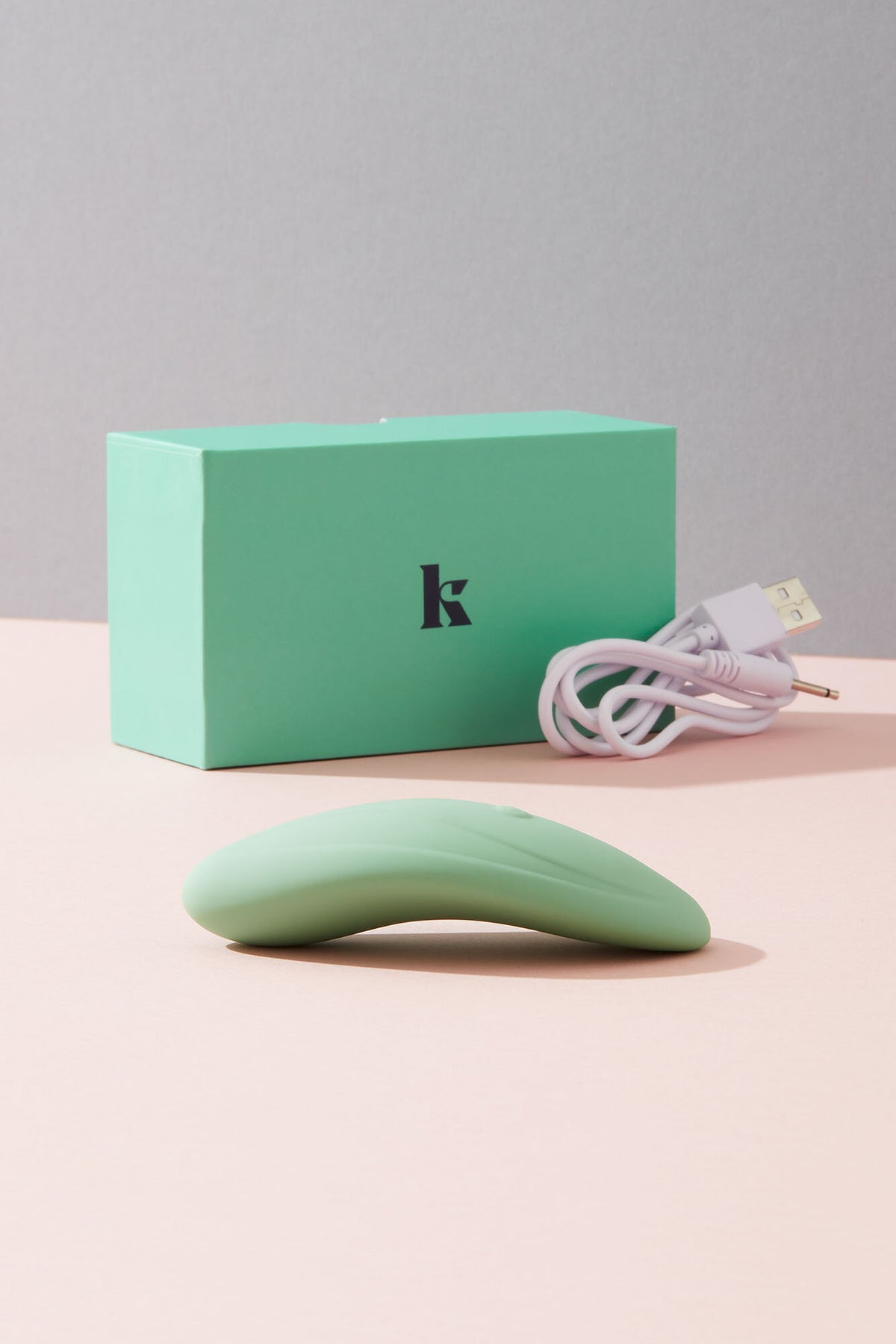
Ready to skip ahead? Meet Wanda — our dual-ended wand vibrator, designed for solo play AND couples. 20 vibration patterns, whisper-quiet, and slender enough to fit between your bodies.
Shop Wanda →How to actually bring it up (without it being weird)
Let’s get the hardest part out of the way first. The conversation.
The good news: it’s almost certainly less scary than you think. A study from Indiana University found that roughly 50% of men and 53% of women have already used a vibrator during sex. And 70% of men in the study said they were not intimidated by their partner using one. So the chances are, your partner is either already open to it or has been quietly curious themselves.
The trick is timing and framing.
When to have the conversation
Not during sex. Not after disappointing sex. And definitely not during an argument about sex.
The best time is a low-pressure, relaxed moment. On the sofa watching TV. In bed scrolling your phones. Making dinner. The less ‘we need to talk’ energy you bring to it, the more natural it feels. You’re not delivering news. You’re sharing an idea.
What to actually say
If you’re not sure how to start, steal one of these:
“I read this thing about using a vibrator during sex and honestly it sounds really fun. Would you be up for trying it?”
“I’ve been thinking about ways we could try something new together. What would you think about bringing a toy into the mix?”
“I saw this vibrator that’s apparently designed for couples and I’m kind of curious. Want to look at it together?”
The key word in all of these is “together.” You’re framing it as something you want to explore as a pair, not something that’s missing.
What if they think they’re not enough?
This is the elephant in the room, so let’s address it directly. Some partners hear “vibrator” and interpret it as “you’re not satisfying me.” That’s an understandable insecurity, even if it’s not the reality.
Here’s how to reframe it: a vibrator provides a specific type of physical stimulation that human hands, tongues, and bodies simply can’t replicate. It’s not better. It’s different. And combining it with everything your partner already does is what makes the experience next-level.
If it helps, remind them: a vibrator can’t kiss you, can’t hold you afterwards, can’t make you laugh mid-way through. It’s a tool, not a competitor. It’s closer to a really good pillow than a rival.
And if they say no? Respect it. Suggest trying it on your own first so they can see how you enjoy it, and revisit the idea later. No pressure, no timelines.
Shop together (it’s surprisingly fun)
Browsing for a vibrator together turns it into ‘our thing’ instead of ‘your thing.’ You can talk about what looks interesting, what seems too intimidating, what makes you both laugh. It’s foreplay for the foreplay.
Wanda was designed for exactly this — couples who want something versatile, quiet, and impossible to use wrong. Dual-ended, 20 vibration patterns, medical-grade silicone.
Meet Wanda — £63 →What to look for in a couples-friendly vibrator:
- Small or slim enough that it won’t get in the way during sex
- Multiple speed/pattern settings (so you can find what works for both of you)
- Body-safe silicone (always — if it doesn’t say what it’s made of, walk away)
- Waterproof (for easy cleaning and, well, shower options)
- Quiet — nothing kills the mood faster than a vibrator that sounds like it’s mowing the lawn
Our Wanda was actually designed with this exact use case in mind. She’s dual-ended (one side for pinpoint clitoral stimulation, the other for broader massage), has 20 vibration patterns, and is slender enough to fit between your bodies during sex. Plus she’s whisper-quiet, which matters more than you’d think.
What kind of vibrator actually works during sex?
Not all vibrators are created equal when it comes to partnered play. Some are brilliant on their own but a logistical nightmare with another person involved. Here’s what to know.
What to avoid for couples play
‘Full-size’ wand massagers — the big ones with the tennis ball-sized head. Incredible solo, but during sex they take up too much space and can be awkward to hold between two moving bodies. Save these for your own time.
Anything with a loud motor — if it sounds like a kitchen appliance, you’re both going to end up giggling instead of focusing. Not inherently a bad thing, but probably not the vibe you’re going for (pun intended).
Cheap materials — if the vibrator smells like a shower curtain or the listing doesn’t say what it’s made of, hard pass. Your body deserves medical-grade silicone, not mystery plastic. (If you want the full rundown on what to avoid, we’ve got a complete beginner’s guide that covers this.)
What works brilliantly
Bullet vibrators — small, discreet, easy to hold in position during penetration. Our Bette is a finger vibe that literally straps to your hand, so you don’t need to worry about dropping it mid-moment.
Slim wand vibrators — dual-ended designs like Wanda give you options. Use the precision tip for focused clitoral stimulation, or the broader end for more diffuse, rumbly vibes. Having two ends means you can switch without pausing to find a different toy.
Finger vibrators — worn on your hand, so it feels like an extension of your partner’s touch rather than a separate device. Great for couples who want the sensation of a vibrator without a visible ‘toy’ in the mix.
The general rule: the more compact and versatile it is, the easier it’ll be to use with a partner. You want something that works with your body positions, not against them.
The 5 best positions for using a vibrator during sex
This is the section you’re actually here for, isn’t it? Let’s get practical.
Each of these positions has been chosen because they give you (or your partner) a free hand, enough space for a vibrator, and a comfortable angle that doesn’t require a degree in engineering.
1. Spooning
Why it works: Your partner enters from behind, which means both your hands are completely free. This is the easiest position for vibrator beginners because there’s no fumbling, no balancing, and no geometric puzzles to solve.
Where to hold the vibrator: Against your clitoris, directly. You control the pressure and angle. Or your partner can reach around and hold it for you — which is hot, because they’re essentially giving you a three-way experience with just two people.
Wanda tip: The broader end is perfect here for wide, rumbly stimulation. You’re lying down, so you don’t need to grip hard — just let it rest against you.
2. Doggy style
Why it works: One hand free to reach underneath. The angle means the vibrator won’t get bumped out of position by your partner’s movement.
Where to hold the vibrator: Reach between your legs and hold it against your clitoris from underneath. Alternatively, your partner can reach around from behind. Some people find propping up on their forearms (instead of hands) gives better stability.
Honest note: This one requires a bit of coordination. If you’re propping yourself up with one arm, make sure you’re on a surface with good grip. Silk sheets and one-armed doggy style is a recipe for a faceplant.
3. On top (cowgirl)
Why it works: You control the angle, the speed, AND the vibrator. Your partner can watch, which is exciting for both of you. And because you’re doing the moving, you can grind against the vibrator in a way that feels natural.
Where to hold the vibrator: Between your bodies, pressed against your clitoris. A grinding motion works with the vibrator rather than against it — you’re not bouncing the toy away, you’re pressing into it.
Partner involvement: Your partner can hold the vibrator from underneath while you ride, giving them an active role. This often feels more connected than one person holding their own toy.
4. Modified missionary
Why it works: Pop a pillow under your hips. This changes the angle of penetration AND creates a small gap between your bodies — just enough space for a vibrator.
Where to hold the vibrator: Either you or your partner reaches between your bodies and holds it against your clitoris. Your partner may need to prop themselves up slightly on one arm to create space.
Honest note: Missionary is the trickiest position for vibrators because there’s the least amount of space between you. A bullet or finger vibe works much better here than a wand. This is where Bette really shines — she’s tiny enough that she doesn’t need much room.
5. Oral sex + vibrator combo
Why it works: Massively underrated. No space constraints. Both hands free. Your partner goes down on you while you (or they) hold a vibrator against you simultaneously. The combination of tongue and vibration is… a lot. In the best possible way.
Where to hold the vibrator: You can hold it against yourself while they use their mouth, or they can hold it while they go down on you, switching between their tongue and the toy. Some people use the vibrator on the clitoris while their partner focuses their mouth lower, or vice versa.
Wanda tip: The precision end is ideal here. Your partner can hold the broader end for easy grip while the narrower
It’s going to be awkward the first time (and that’s completely fine)
We’re going to be honest with you, because that’s kind of our thing: the first time you use a vibrator with your partner, it will probably be at least a little bit awkward.
You’ll fumble. It might slip out of position. Someone will elbow someone. You’ll accidentally hit the wrong button and suddenly the vibrator is on its highest setting and you’re both startled. These things happen. They’re normal. And honestly? They’re often the moments you’ll laugh about afterwards.
Here’s how to make the first time actually enjoyable:
Start on the lowest setting. Always. You can build up. Starting high and trying to dial back doesn’t work — your body needs to warm up to the sensation, especially if a vibrator is new for one or both of you.
Talk during. Not a monologue. Not a performance. Just small bits of feedback: “that feels good,” “a bit lower,” “hold it there.” Feedback is not a mood killer. It’s actually incredibly sexy. You’re telling your partner exactly how to make you feel amazing. That’s a gift.
Don’t aim for orgasm on the first try. Aim for fun. Aim for curiosity. Aim for “huh, that felt interesting.” The orgasms will come once you’re both comfortable and you’ve figured out what works. Putting pressure on the first time to be mind-blowing is a guaranteed way to make it underwhelming.
Laughing is allowed. Actually, laughing is encouraged. If you can laugh during sex, it means you’re comfortable. And comfort is the foundation of genuinely good sex. The couples who have the best sex aren’t the ones performing — they’re the ones who can crack up when something goes sideways and then carry on.
Debrief afterwards. Gently. Casually. “What did you think?” or “Should we try that again next time?” is all you need. It doesn’t need to be a performance review. Just an open door.
Frequently asked questions
Will a vibrator desensitise me?
No. You might experience temporary numbness after extended use — that’s just blood flow doing its thing, and it resolves on its own within minutes. There is no scientific evidence that vibrators cause permanent desensitisation. Your nerve endings are fine. We promise.
What if my partner feels replaced?
A vibrator can’t kiss you. It can’t hold you. It can’t make you laugh or know exactly when to pull you closer. It’s a tool that provides a specific kind of physical stimulation — nothing more. Frame it as something you’re adding to the experience, not something you’re replacing your partner with. Because that’s exactly what it is.
What’s the best vibrator for couples?
Something small enough to fit between your bodies, quiet enough that it doesn’t break the mood, waterproof for easy cleaning, and with multiple speeds so you can find what works. We’d recommend Wanda (our dual-ended wand — versatile, slender, 20 patterns) for most couples, or Bette (our finger vibe — ultra-discreet, straps to your hand) if space is tight or you want something more subtle.
Can you actually use a vibrator during penetration?
Yes — that’s literally what this entire guide is about. Spooning, doggy style, and cowgirl are the easiest positions for this. Modified missionary works too, but you’ll want a smaller toy. See our full positions breakdown above.
Do I need a special ‘couples vibrator’?
Not necessarily. There are vibrators specifically designed for use during penetrative sex (usually C-shaped or worn internally), and they can be great. But any compact external vibrator works just as well during couples play and gives you more flexibility for solo use too. You don’t need a dedicated ‘couples only’ device — a versatile one will do both jobs.
What lube should we use with a vibrator?
Always water-based with silicone toys. Silicone-based lube can degrade silicone toy surfaces over time. A good water-based lube reduces friction, increases comfort, and makes everything feel smoother. We make one called Glide that’s designed specifically to pair with our toys (currently sold out but restocking soon — join the waitlist).
Your homework
That’s it. That’s the whole guide.
The positions, the product recommendations, the conversation starters — none of it matters if you don’t take the first step, which is just… talking about it.
So here’s your homework: have the conversation. Tonight, tomorrow, this weekend. Even if it’s clumsy. Even if you giggle through it. Even if the first thing out of your mouth is “I read this article and now I want to try something” and you just show them this page. The bar is on the floor. Just start talking.
Because here’s the truth: sex gets better when you stop performing and start communicating. A vibrator just gives you something fun to communicate about.
Ready to try it?
Wanda is our dual-ended wand vibrator — designed for solo play AND couples. Body-safe silicone, waterproof, 20 vibration patterns, and whisper-quiet.
Want something smaller? Bette is our finger vibe — straps to your hand, ultra-discreet, £32.